
The Great Levelling
The Death of Expertise
For centuries, expertise was the ultimate advantage. It defined careers, built institutions, and separated the credible from the uninformed. Doctors trained for years to diagnose. Lawyers spent decades mastering case law. Journalists worked their way up newsrooms, gaining experience in the field.
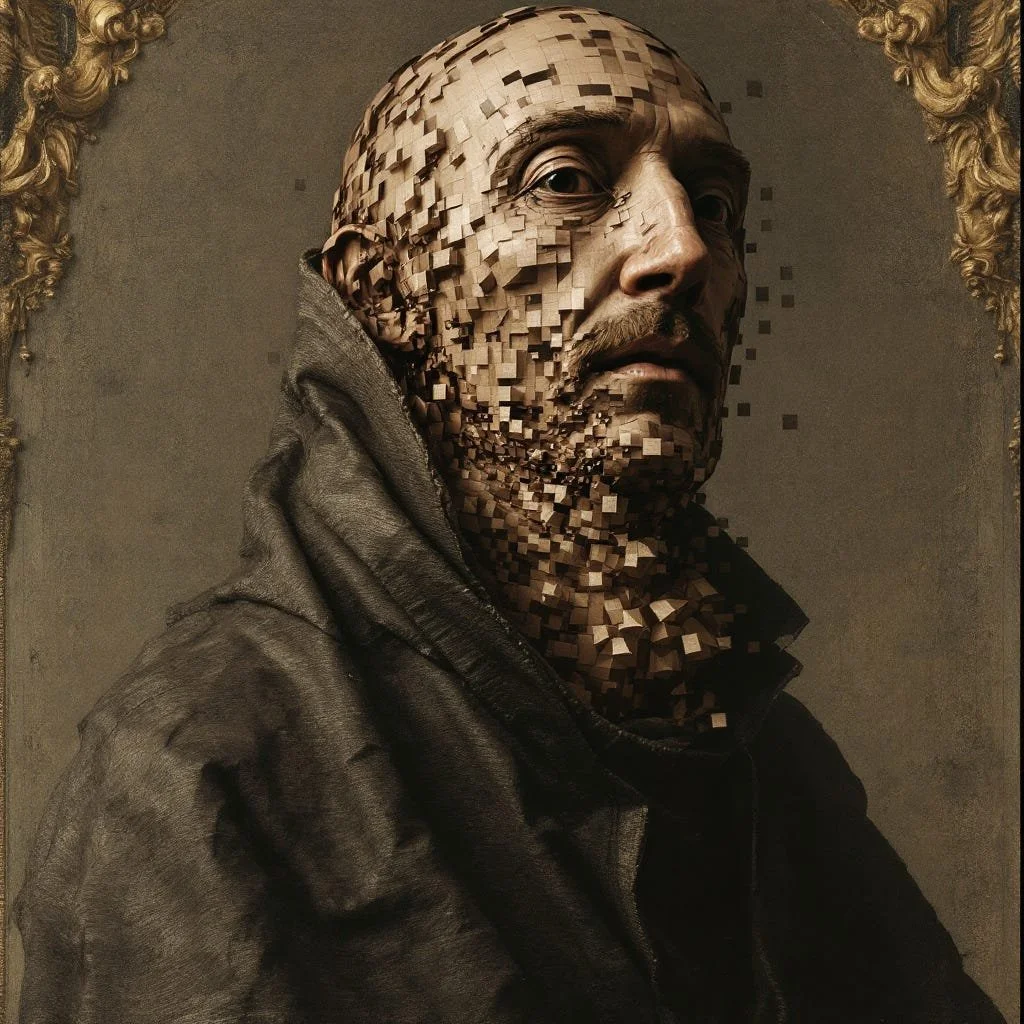
Not in the gradual way industries evolve. Not in the way automation replaced factory workers. But in a way that collapses the very foundation of expertise itself.
AI doesn’t just challenge experts. It absorbs their knowledge, scales it, and distributes it freely until the gap between novice and master becomes meaningless.
This is the Great Leveling.
We Used to Earn Knowledge. Now We Just Access It.
For centuries, acquiring expertise meant years of study, trial and error, and lived experience.
AI bypasses all of it.
A radiologist might spend decades refining their ability to detect abnormalities on an X-ray. AI can analyze millions of scans, detecting subtle patterns imperceptible to the human eye, done in seconds.
I saw this firsthand. My father’s X-ray came back but without an explanation. Before we could even get an appointment, I uploaded the images to ChatGPT. It correctly diagnosed the condition, weeks before the doctor confirmed it.
And it’s not just medicine.
Legal professionals? AI drafts contracts, analyses case law, and predicts trial outcomes more precisely than junior associates.
Marketing strategists? AI generates ad copy, builds content strategies, and forecasts market trends in real-time.
Financial analysts? AI identifies patterns and risks faster than human traders.
The moat that once protected experts?
It no longer matters what you know.
It matters how quickly you can adapt when knowledge itself is free and instant.
How to Stay Ahead When AI Is Smarter Than You
So what’s left? You either compete with it (and lose) or use it to build something no one else has.
1. Stop Consuming. Start Creating.
The internet is already drowning in AI-generated insights, summaries, and regurgitated content.
Most of it adds nothing new.
And yet, most people are spending more time consuming it and filling their heads with neatly packaged, unoriginal thoughts.
2. Own the AI. Don’t Just Use It.
Most people treat AI like a better search engine. Treating it like a tool for surface-level insights and quick answers.
But the real leverage isn’t in using AI to do more.
It’s in using AI to think better, make sharper decisions, and execute faster.
The smartest people aren’t replacing themselves with AI.
They’re building AI-driven workflows, decision engines, and automated systems that multiply their thinking.
If you’re not building that, someone else is.
3. Train AI to Think Like You, Not for You.
AI isn’t creative. It doesn’t have instincts.
It works with patterns, not originality.
It can remix what exists, but it doesn’t see in the way humans do.
The people who will thrive in this shift? They aren’t letting AI do their thinking for them.
They’re using it as a mirror, a pressure test, a way to sharpen their own edge.
A Prompt to Expose Your Blind Spots
Instead of worrying about AI replacing you, use it to challenge your own thinking before someone else does.
Try this:
Act as an expert in [your field]. Give me five reasons why my understanding of [topic] is outdated or incorrect. Challenge my assumptions and show me where I might be wrong.Then sit with the response.
📌 Did it expose something you hadn’t considered?
📌 Did it challenge an idea you were clinging to?
📌 Could someone with no experience use AI to outperform you?
Build or Be Left Behind
Most people will waste time debating whether AI is a threat.
The ones who matter? They’ll be too busy building.
If knowledge is free and instant, the only thing that will set you apart is what you do with it.
So the real question therefore is: Are you still thinking like an expert, or are you thinking like a builder?
The future won’t wait.
All the Zest 🍋,
Cien