
AI Won’t Save You From Saying No
A letter from someone inside the experiment.
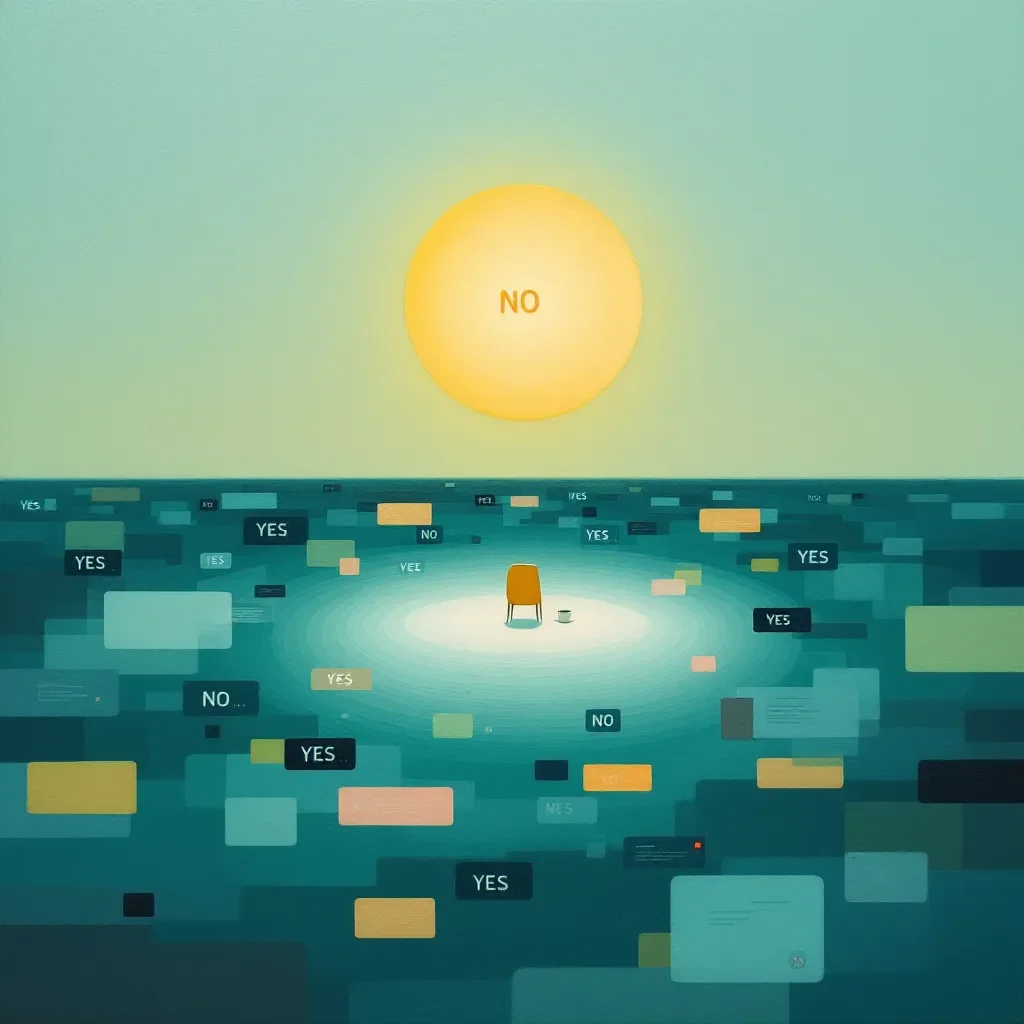
AI can plan your week, draft your pitch, write your content, and spin up an agent for almost anything you want to do.
If you know me, you know I love that. I say yes a lot. I encourage people to build agents. I spend my days helping founders, teams, and solo operators plug AI into as many parts of their work as make sense. As I build more and say yes more often, though, one thing keeps getting clearer.
AI makes it incredibly easy to add, but subtraction still needs you.
So this letter comes from inside the experiment, from someone who loves leverage and loves saying yes, and who is learning in real time that the real work sits in choosing which yeses deserve a machine behind them… and which ones need a simple, human no.
This Letter Comes From Someone Inside The Experiment
The more I work with AI, the more I realise that AI can’t change who we are but it multiplies what is already there. When you have a tendency to overcommit, AI hands you the tools to overcommit with. When you already struggle to say no, it happily organises, drafts, schedules, and optimises every extra yes you stack on top.
On the surface, that momentum looks like progress. Your calendar fills with “great opportunities”, your content queue stays active, and your agents hum away in the background. Underneath, though, you notice the long day that technically “worked” leaves you wired and empty.
I move through all of this while building my business and still trying to have a life that is not entirely inside a browser tab.
How I Use AI Without Abandoning Myself
Here is what this looks like in my actual life, not in theory. It is simple on paper and uncomfortable in practice.
1. Decide what “a good yes” means for you
Before tools, I sit with one question:“If things go well, what am I actually trying to build in the next 12–24 months?”
For me, that includes:
A healthy, sustainable business,
Time and energy to think,
Space for my relationships and my health.
From that, I define what a good yes looks like. For example:
It moves my business forward in a clear way
It strengthens relationships with the right customers or partners
It teaches me something I actually need for the next stage
Then I feed that into my AI:
“Here are my priorities for the next year. When I ask you about an opportunity, help me check if it matches these. Be honest.”
I am still the one who decides. But now the agent has context beyond “more, faster”.
2. Use AI as a decision mirror
When something comes in that I am tempted to say yes to, I paste a short summary into my assistant and ask:
“Summarise the upside and downside of saying yes to this, and of saying no. Focus on my time, energy, and strategy.”
I do this for:
Potential projects
Speaking invitations
Collaborations
Even new tools I feel drawn to try
Often the AI reflects back the thing I was avoiding:
“This looks exciting but will add another weekly commitment.”
“This aligns with your mission but not with your current capacity.”
It does not remove the emotion, but it gives me a clearer picture to react to. That alone reduces the number of reflex yeses.
3. Let agents take the “easy yes” so you can guard the real no
I am still pro-agent. I want people to build them everywhere it makes sense.
The key is choosing where they sit.
I try to route three types of work to agents:
Repetitive questions
Routine communication
Anything that is important but low meaning for me
That might look like:
An agent that answers common customer questions
An assistant that drafts first versions of emails and posts
A simple system that tracks follow-ups and nudges me when I need to show up
This is where I want more yes:
Yes, answer that quickly
Yes, send that resource
Yes, keep this moving in the background
AI amplifies my capacity. Boundaries decide where that capacity goes.
4. Prepare your “no” muscles in advance
I still find saying no uncomfortable. It is easier to overpromise and deal with the consequences later.
So I cheat a little with AI.
I ask it to help me write a few versions of no:
A kind no
A clear boundary no
A “not now” no
I store them, then tweak as needed when real situations come up.
It sounds small, but it matters. The less emotional effort it takes to say no, the more likely I am to protect the parts of my work and life that really need me.
One Simple Question for This Week
Look at your next seven days and ask yourself:
“Where have I already abandoned myself a little?”
In the end, the goal is less about perfect discipline and more about giving yourself a better chance.
AI can hold your context, reflect your priorities back to you, and carry hundreds of small yeses on your behalf.
You decide which yeses shape your days, your work, and the life you are actually building.
All the zest 🍋
Cien