
Why Your AI Is Just Really Good Parrot
And How to Build One That Actually Grows With You
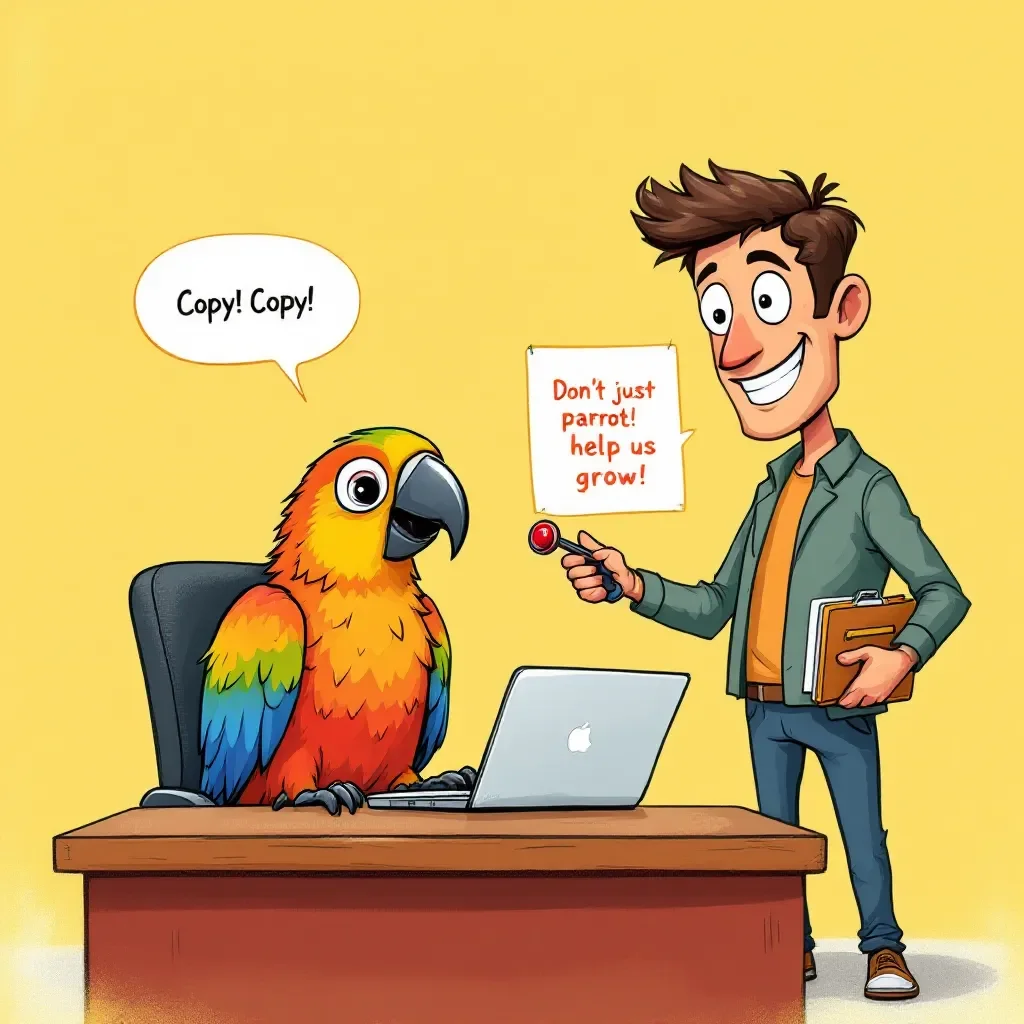
We’re living in the golden age of Agentic “memory,” and everyone gets giddy when ChatGPT recalls what they said last week. (I especially love how it reminds me that losing my phone last year proves I have resilience.)
For businesses and teams, this feels like a leap forward. Finally, we have an assistant that pays attention.
But here’s the lemony twist: Most AI “memory” is just next-level mirroring. Your assistant isn’t connecting dots or nudging you in smarter directions. It simply reflects what you already do and sometimes with suspiciously good manners.
If you want an AI that grows with you, anticipates your next move, helps you break old habits, or flags when you’re about to repeat mistakes, you need more than a mirror. You need memory with purpose and careful curation.
Making Memory Work for You (Not Just About You)
Most teams start by uploading everything from project files, meeting notes, old Slack threads and hoping the AI will magically make sense of it all. The result? An overwhelmed AI.
Instead, treat your AI’s memory like you would your own: intentional, focused, and a little bit ruthless. Start by picking the signals and choose the five or ten facts, workflows, or key principles you want your AI to always remember.
Teach Your AI to Help Your Team Grow
True value comes when your AI helps your team notice patterns, reflect on outcomes, and improve.
Here’s how to shift from echo chamber to growth partner:
Start with small, regular “reflection rituals.” Have your AI check in at the end of the week or after a project wraps, and ask:
“What worked well that we should do again?”
“What flopped, and what might we try differently next time?”
“Did we experiment, or did we play it safe?”
Don’t keep these conversations private. Encourage everyone to share lessons, wins, and even “that went sideways!” stories in a visible way like on a shared doc or a #ailearning channel.
Give feedback to your AI, too. When it gets something wrong, or you change your mind, tell it why. The more context you provide, the more helpful and tuned-in your assistant becomes.
Prompt to try:
““This isn’t quite what I expected. Can you show a few different options or explain how you came up with this answer?””
Or
““This doesn’t feel right. Here’s an example of what I had in mind and can you compare the two and spot the differences?””
Pro tip: At the end of each month, review your AI’s memory together as a team. What patterns is it picking up? What are you proud of? What needs a shake-up? Not only does this strengthen your memory, it brings your team together around improvement and experimentation.
Build an AI That Challenges You (Nicely)
The smartest teams build assistants that nudge, question, and help you break out of autopilot. Here’s how:
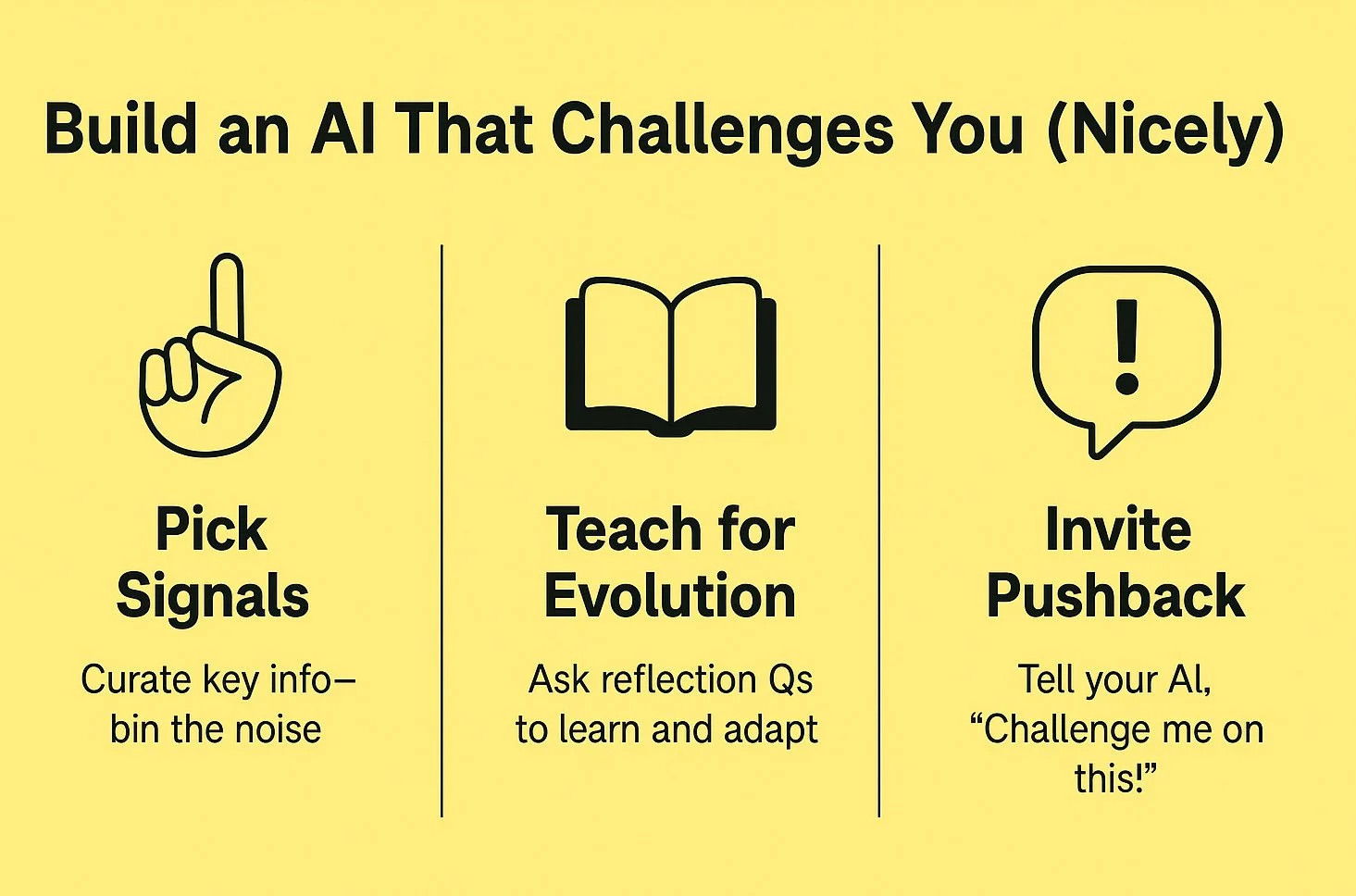
1. More data doesn’t mean more intelligence. Instead of dumping everything into your AI, curate the key information that moves the needle. Bin the noise, keep what matters.
2. Your AI can (and should) help your team get better. Build in regular reflection questions.
Ask you questions like, “What should we try differently next time?”
3. Don’t let your assistant become a polite yes-bot. Ask it to “Challenge me on this!”
Ask your AI to flag ruts, spot repetitive habits, and suggest new approaches.
When you build in reflection, challenge, and a dash of humour, your AI assistant becomes your team’s creative sidekick.
So this week, challenge your AI and let it challenge you right back. Audit your memory, add a few “nudge” instructions, and see what changes. Who knows? You might just uncover your next breakthrough (or at least get a laugh out of it).
Ready to upgrade your memory from parrot to coach? Go on, then!
Lots of Lemons 🍋
Cien